NFL London Games Betting Trends: ATS Records, Totals Data and the Travel Factor
 Available in US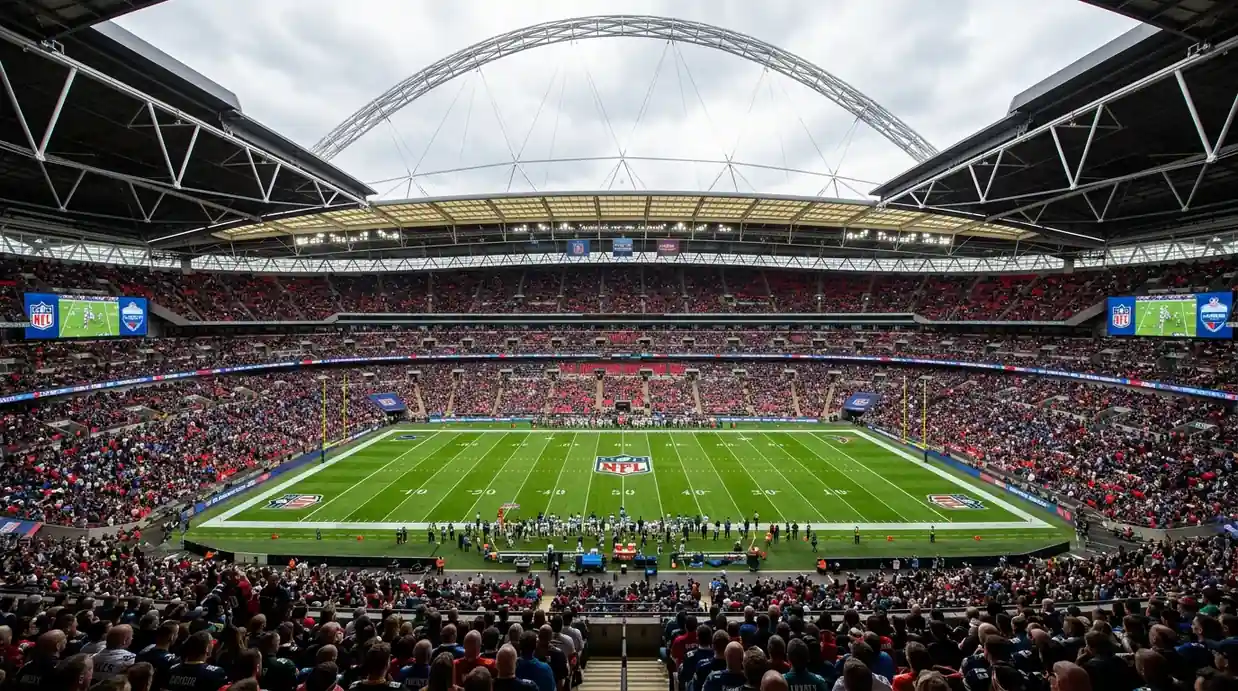
I was at Wembley in October 2024 when the stadium hit a record 86,651 for an NFL regular-season game. The noise was remarkable — genuinely on par with some of the loudest American stadiums I have visited. But the atmosphere is only half the story. The other half is what London Games do to the betting line, and that is where UK punters have a genuine informational edge over the rest of the market.
London Games ATS History: What the Record Shows
Since the NFL began playing regular-season games in London in 2007, the programme has welcomed more than 3 million fans through the turnstiles. Henry Hodgson, the NFL’s GM for UK and Ireland, has described the league’s “proud history” in London and spoken about expanding the sport beyond the capital and across the country. But for bettors, the question is not whether the games are popular — it is whether the lines are accurate.
The ATS record for London Games shows a modest but persistent lean toward the underdog. Bookmakers set these lines using the same models they apply to domestic games, but the models do not fully capture the logistical chaos of a transatlantic fixture. Both teams travel, but the disruption is not symmetrical. The designated “home” team in a London Game does not enjoy the traditional home-field advantage — no familiar stadium, no established crowd allegiance, no routine. The spread often prices in a home edge that does not functionally exist, which inflates the favourite and creates value on the dog side.
I have also noticed that London Game lines tend to be slightly stale at open compared to standard fixtures. The market for these games is thinner early in the week because American bettors treat them as oddities rather than priority events. That means the opening line reflects less sharp action than usual, which gives early movers — including UK punters who follow these games more closely — a window to grab value before the number sharpens by Saturday.
The designated “away” team in London Games has actually outperformed expectations when receiving points. With neither side enjoying a genuine home-field advantage, the underdog’s inherent spread cushion becomes the dominant factor rather than any venue edge. I weight London Games as neutral-site contests in my models and only deviate if one team has a documented UK following large enough to create a genuine atmosphere split.
Totals in London: Lower Than You Think
The unders have been kind in London. Games played at Wembley and Tottenham Hotspur Stadium have gone under the total at a rate above 55% across the programme’s history. The reasons are practical, not mysterious. Teams arrive jet-lagged, operate on compressed practice schedules, and face an unfamiliar playing surface. Offensive timing suffers more than defensive execution because timing routes and blocking schemes require sharper coordination than zone coverage and run fits.
Over 6 million viewers watched the London Games in 2025 through television and streaming, and the viewership growth has attracted more bookmaker attention to these markets. Totals lines have tightened in recent years as a result, but I still find an edge when the posted total sits above the combined scoring averages of both teams by two or more points. The market, influenced by the spectacle of a London event, tends to overestimate the offensive output — expecting a showcase when the reality is usually a grind.
The Travel and Jet-Lag Variable
Both teams fly to London, so you might assume the travel impact is neutral. It is not. West Coast teams cross eight time zones; East Coast teams cross five. That three-hour difference in circadian disruption is measurable. West Coast squads have historically performed worse in London Games than their East Coast counterparts, both straight up and against the spread.
International NFL games on the NFL Network drew an average of 6.2 million viewers in 2025 — a 32% jump from 2024 — and the expanded viewership has brought more data scrutiny to these matchups. What the data confirms is that arrival timing matters. Teams that fly in on Wednesday or Thursday fare better than those who arrive on Friday. The extra day of acclimatisation shows up in penalty rates and third-down conversion efficiency, two metrics that track closely with ATS outcomes.
For UK punters, this is actionable intelligence you can gather simply by following team travel announcements. If one team is arriving two days earlier than its opponent, factor that into your assessment. The rest and scheduling advantages breakdown covers the broader mechanics of how preparation time shapes spread outcomes.
The UK Fan Atmosphere and Its Effect on the Game
Roger Goodell has spoken about the reaction of fans every time the NFL plays its game in the UK or Germany, describing the response as “extraordinary” and committing to making the NFL a global sport. That passion is real and it affects the game in ways that betting models do not capture.
The NFL counts more than 14.3 million fans in the UK, with roughly 4 million classified as avid. Sixty-eight percent of those fans fall in the 18-44 age bracket — younger, louder, and more engaged than the typical stadium crowd for a mid-season domestic game. The designated “home” team in a London fixture often benefits from a partisan UK following, particularly if it is a team with a large international fanbase like the Jacksonville Jaguars, who have played in London more than any other franchise.
Does this translate to an ATS edge for the designated home side? The data is mixed. In games where the “home” team has a genuine UK following, the cover rate ticks up slightly. In games where neither team has a strong UK presence, the atmosphere is neutral and the underdog trend I described earlier reasserts itself. My rule of thumb: check which team has the larger UK fanbase before applying any home-field adjustment. If neither team is popular here, treat the game as a neutral-site contest and lean toward the underdog.
Do teams playing in London tend to go over or under the total more often?
London Games have historically gone under the total at a rate above 55%. Jet lag, compressed practice schedules, and unfamiliar playing surfaces disrupt offensive timing more than defensive execution, leading to lower-scoring contests than the posted total implies. The effect is strongest when West Coast teams are involved due to the larger time-zone adjustment.
How does the transatlantic travel schedule affect NFL London Game spreads?
Travel impact is not symmetrical. West Coast teams cross eight time zones compared to five for East Coast teams, and the additional circadian disruption correlates with worse ATS performance. Teams that arrive in London earlier in the week — Wednesday or Thursday rather than Friday — show better penalty rates and third-down efficiency, both of which track closely with covering the spread.
Prepared by the nfl Betting Trend editorial staff.