NFL Futures Betting Trends: Super Bowl Odds, Win-Total Windows and When to Lock In
 Available in US
My best ever futures bet was a Super Bowl wager I placed in June at 25/1. By September the same team was 10/1. By November it was 6/1. The bet paid the same regardless of when I placed it, but the value was captured entirely in those early weeks when the market was sleeping. Futures betting is not about predicting the future with precision — it is about identifying where the market’s current price underestimates a plausible outcome, and doing so before the crowd arrives.
Super Bowl Futures: The Longest Bet in Football
Super Bowl futures open within days of the previous Super Bowl and remain active throughout the entire season. Legal sportsbooks processed $1.76 billion in wagers on Super Bowl LX, up from $1.39 billion on Super Bowl LIX. Much of that money lands close to the game, but the sharpest value exists months earlier — in the offseason, when the market is thin and the pricing is driven by projection models rather than on-field data.
The challenge with Super Bowl futures is structural: you are tying up capital for months with no guarantee of return. A 50-pound bet placed in June on a team at 20/1 is money you cannot use for weekly spread bets until February. That opportunity cost is real, and it shapes my approach. I allocate no more than 5% of my seasonal bankroll to futures, spread across two or three positions. The aim is to capture outsized returns on one or two bets rather than build a diversified futures portfolio.
The best Super Bowl futures value typically sits in the 15/1 to 30/1 range — teams with a plausible path to the Super Bowl that the market has not yet fully endorsed. Teams priced at 5/1 or shorter are typically priced efficiently because they attract heavy sharp action. Teams at 50/1 or longer are usually longshots for a reason.
Win Totals: The Quieter Edge
Win-total futures — betting on whether a team will finish over or under a specified number of wins — are my favourite futures market because they are more granular and more analysable than Super Bowl outright bets. Americans wagered $30 billion on the 2025 NFL season, and win totals attracted a growing share of that handle as the market matured.
The key to win totals is identifying teams whose rosters have changed significantly but whose win total has not adjusted proportionally. A team that lost its starting quarterback to free agency but retains a win total of 9.5 based on last season’s 10-win campaign is almost certainly overpriced. Conversely, a team that added a Pro Bowl pass rusher and a veteran offensive tackle but whose win total sits at 7.5 based on last year’s 6-11 finish may be underpriced.
I evaluate win totals using a point-differential model. For each team, I project points scored and points allowed based on roster changes and returning production. That projection translates to an expected win total via the Pythagorean wins formula. If my projected win total differs from the posted number by 1.5 wins or more, I have a position worth taking.
Timing Windows: When to Strike
Futures prices move throughout the year, and each movement creates or destroys value. The optimal timing depends on the type of information driving the move. The global American football betting market reached $9.5 billion in 2026, and the sharpest segment of that market exploits timing asymmetries — placing bets before information is fully absorbed by the line.
Post-draft (late April through May) is the first major window. Draft picks shift roster projections, particularly for teams that add a franchise quarterback or a premium pass rusher. The market adjusts quickly for top-5 picks but slowly for Day 2 and Day 3 selections that may end up starting. If you spot a team whose third-round pick is likely to fill a critical need, you may have a brief window before the market catches up.
Pre-training-camp (June) is my primary betting window, as I described in the 2026 season outlook. The market is thinnest, sharp action is minimal, and the pricing relies on projection models that have not been tested against live data. Post-training-camp (August) is a secondary window: preseason games reveal depth-chart battles and scheme changes that shift win expectations, but by this point the sharp money has arrived and the best value has been captured.
Once the regular season begins, futures prices react to on-field results and the windows become game-specific. A team that loses its Week 1 game may see its Super Bowl odds lengthen by 20-30%, creating a buy-low opportunity if you believe the loss was circumstantial rather than indicative. I place roughly 70% of my futures bets in the offseason and reserve 30% of my futures budget for in-season opportunities where overreaction creates clear mispricing.
Accessing NFL Futures as a UK Punter
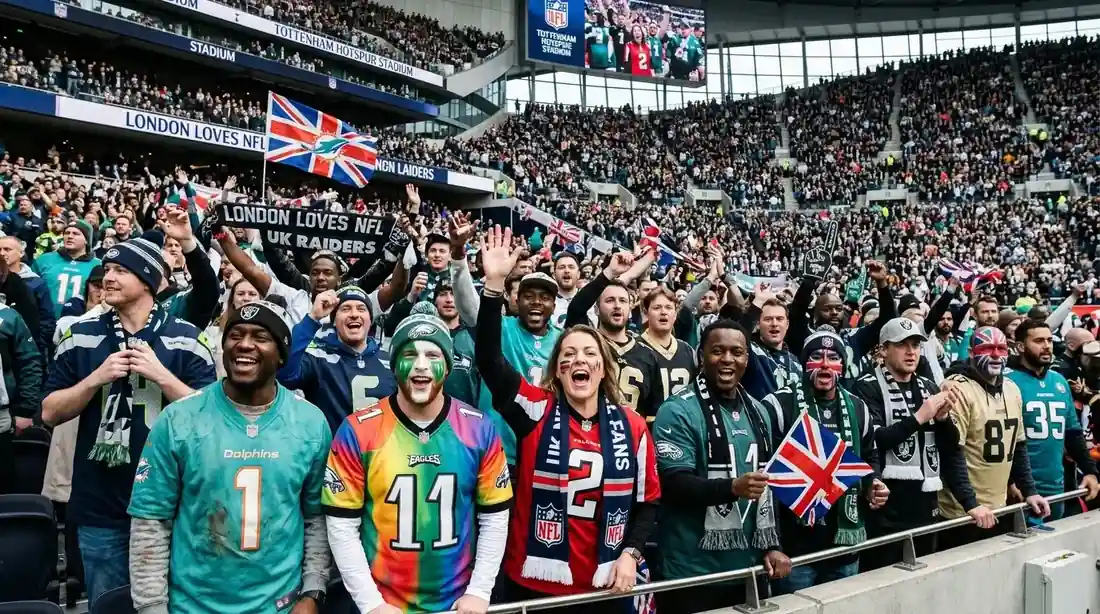
UK-licensed bookmakers offer NFL futures markets from February onward, covering Super Bowl winner, conference winners, division winners, and regular-season win totals. The NFL has more than 14.3 million fans in the UK, and the futures market for American football has expanded considerably as that fanbase has grown.
One practical difference for UK punters: futures odds are typically displayed in fractional format on UK platforms (e.g., 20/1) rather than American format (+2000). The arithmetic is simpler — a 50-pound bet at 20/1 returns 1,050 pounds (1,000 profit plus your stake). Make sure your platform displays NFL futures clearly and check whether the odds include “ties” provisions — some win-total markets push on exact matches while others force an over or under outcome with half-win increments.
When is the optimal time to bet NFL Super Bowl futures for maximum value?
The widest pricing gaps typically exist in the June window — after the draft but before training camp. The market is thinnest, sharp money has not arrived in volume, and the lines rely on projection models rather than on-field data. By August, the best value has usually been captured. In-season opportunities arise when a team suffers a single loss that causes an overreaction in its odds, but these require a pre-existing view of the team’s quality to exploit quickly.
How do UK bookmakers price NFL win-total markets compared to American sportsbooks?
UK bookmakers generally offer similar win-total lines to their American counterparts because the underlying projections come from the same data models and are influenced by the same sharp-money flows. The main differences are cosmetic — fractional odds display, slightly wider margins on less popular teams, and occasional variation in whether half-win increments or push rules apply. The edge for UK punters lies in shopping between UK operators rather than trying to access American sportsbooks.
Published by the nfl Betting Trend team.