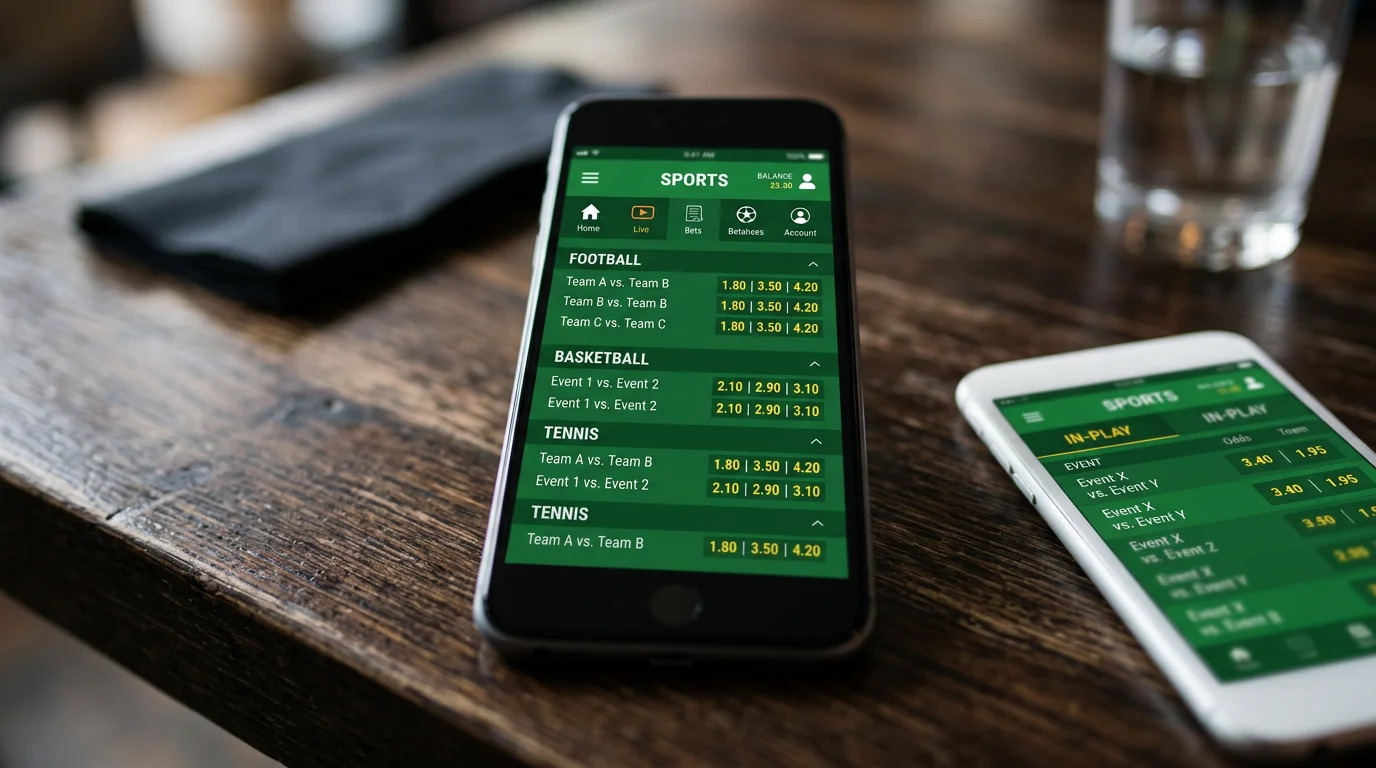
NFL Betting Glossary UK: Every Key Term Explained With Examples for British Punters
 Available in US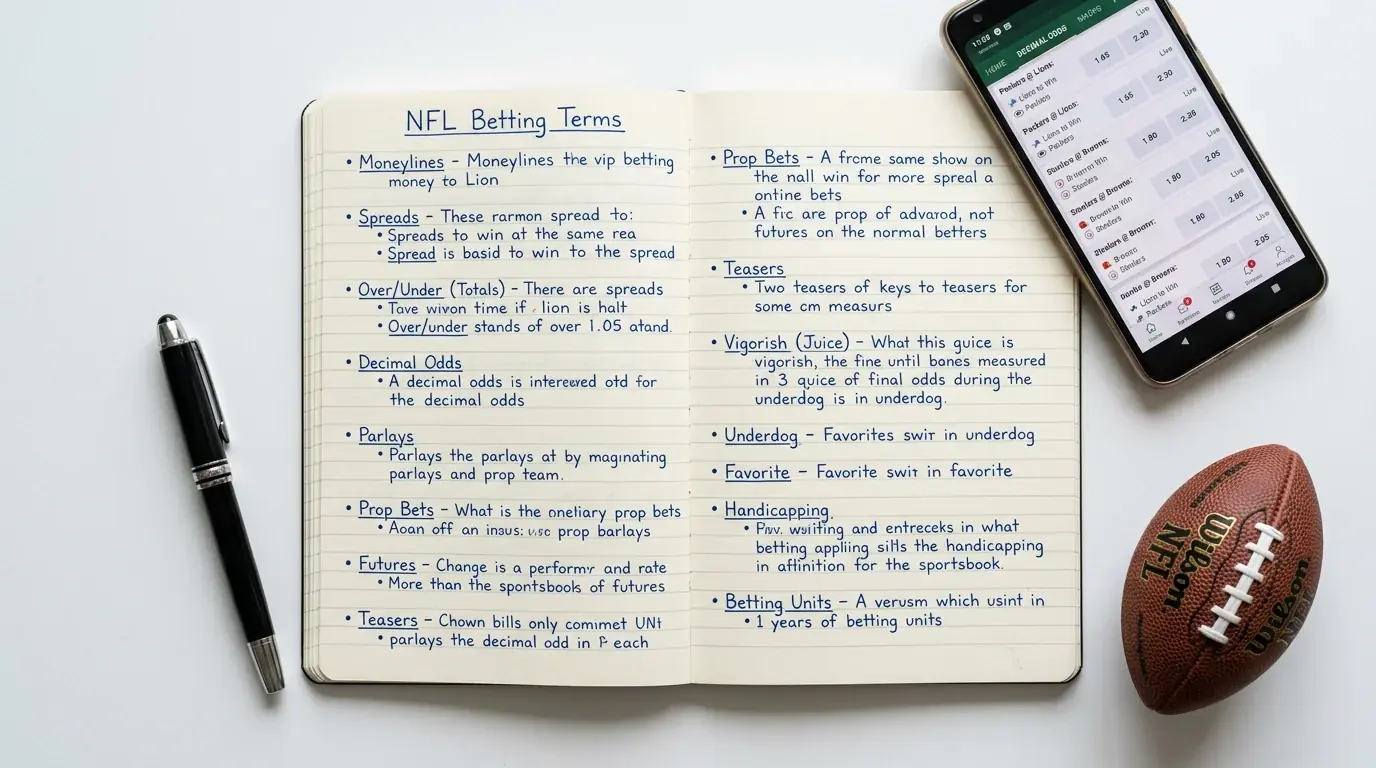
The first time I read an American NFL betting forum, I understood about half the words. “Chalk.” “Dog.” “Vig.” “Covering the nut.” The terminology is dense, borrowed from decades of American sports-betting culture, and almost never explained for a British audience. This glossary exists because I spent years decoding these terms through trial and error, and you should not have to. Every definition below is written with a UK punter in mind, using examples in decimal and fractional odds where relevant.
Spread and Line Terms
ATS (Against the Spread) — A record of how a team has performed relative to the point spread, not their win-loss record. If the Bills are 8-4 ATS, they have covered the spread in eight of twelve games. This is the most referenced metric in NFL trend analysis and the foundation of most data-driven betting strategies. Americans wagered $30 billion on the 2025 NFL season, and ATS records influenced a substantial share of that action.
Cover — To beat the spread. If you back the Bills at -3 and they win by 7, they covered. If they win by 2, they did not cover. “Did they cover?” is the first question every spread bettor asks after a game, regardless of whether the team won or lost outright.
Push — A tie against the spread. If the line is -3 and the team wins by exactly 3, the bet is a push and stakes are returned. Bookmakers use half-point spreads (e.g., -3.5) to eliminate pushes, but whole-number lines still appear and the push scenario is real.
Pick’em (PK) — A game where neither team is favoured. The spread is 0, and you are simply picking the winner. Pick’em games are rare in the NFL and typically indicate two very evenly matched teams.
Key numbers — The most frequently occurring margins of victory in the NFL. The two most important are 3 (field-goal margin) and 7 (touchdown margin). Together they account for nearly a quarter of all final margins. Spreads that cross these numbers carry significantly different win probabilities.
Hook — The half-point on a spread. “Getting the hook” means getting the extra half-point (e.g., +3.5 instead of +3). “Laying the hook” means giving the extra half-point (-3.5 instead of -3). Through key numbers, the hook carries enormous value.
Odds and Pricing Terms
Decimal odds — The format most useful for quick calculation. A price of 1.91 means a 10-pound stake returns 19.10 (10 x 1.91). The number includes your stake in the return. Most UK apps default to fractional but allow you to switch to decimal in settings.
Fractional odds — The traditional UK format. A price of 10/11 means you risk 11 to profit 10. Your total return on a successful 11-pound bet is 21 (11 stake + 10 profit). Fractional odds are intuitive for UK punters accustomed to horse racing but slower for mental arithmetic on NFL markets.
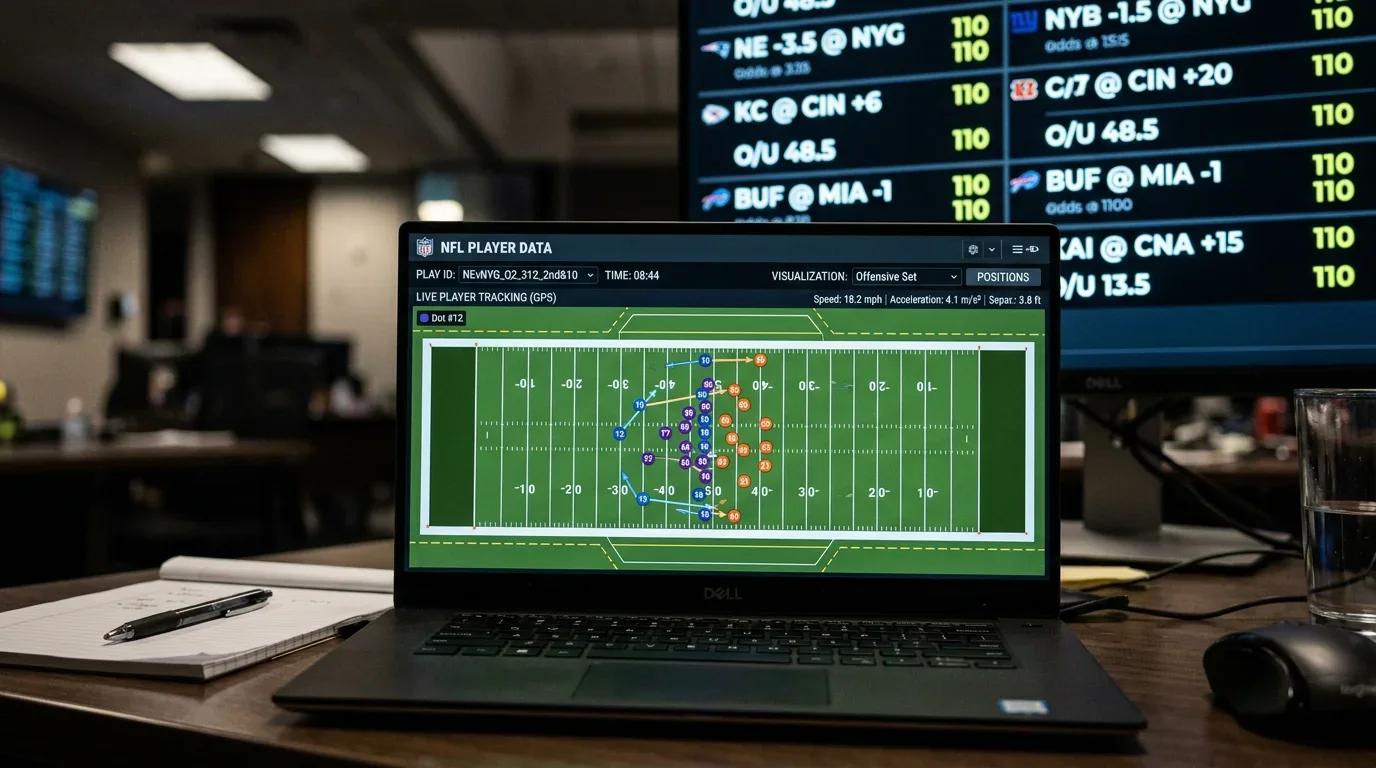
American odds — The format used by US sportsbooks. Positive numbers (+150) show profit on a 100-unit stake. Negative numbers (-110) show how much you must stake to profit 100 units. You will encounter American odds on US-focused data sites and forums. William Hill captured 37.83% of PPC clicks in UK sports betting in February 2026, with bet365 at 16.2% — and both offer settings to display American odds if you prefer the format used in source material.
Juice / Vig (Vigorish) — The bookmaker’s commission built into the odds. On a standard spread bet priced at 1.91 on both sides, the combined implied probability is 104.7%. That extra 4.7% is the vig. Lower vig means better value for the bettor. In UK terminology, this is closest to “overround.”
Overround — The UK term for the bookmaker’s margin. Calculated by converting both sides’ odds to implied probabilities and summing them. An overround of 104% means a 4% margin. The lower the overround, the more efficient the market and the better the price for the punter.
Market and Action Terms
Handle — The total amount of money wagered on a specific event or over a specific period. “The NFL handle” refers to the total amount bet on NFL games. Live and in-play betting now accounts for 53.4% of all wagers globally, meaning the handle is increasingly generated in real time during games rather than before kickoff.
Sharp — A professional or highly informed bettor whose wagers are respected by bookmakers. Sharp action moves lines. When you see a line shift despite the majority of tickets landing on the opposite side, sharp money is the likely cause.
Public / Square — A recreational bettor. Public money tends to favour favourites, overs, and high-profile teams. When sharp and public money diverge, the sharp side is historically more reliable.
Reverse line movement — When the spread moves in the opposite direction to where the majority of public bets are landing. This signals that sharp money on the minority side outweighs the volume of public money. It is one of the most useful signals in pre-game analysis.
Steam move — A sudden, significant line shift caused by heavy, coordinated action from sharp accounts. Steam moves typically happen within minutes and indicate strong conviction from informed bettors.
Chalk — The favourite. “Playing the chalk” means betting favourites. In NFL, chalk bettors tend to be recreational, which is why underdog strategies have historically found edges.
Dog — The underdog. “Backing the dog” means betting on the team getting points on the spread or expected to lose outright on the moneyline.
UK-Specific Terms and Contexts
Punter — UK term for a bettor. Used throughout this site and in UK betting culture. The American equivalent is “bettor” or “handicapper.”
Accumulator (Acca) — The UK term for a parlay. A multi-leg bet where all selections must win. Accas are popular in UK football betting and the structure applies identically to NFL markets.
Each-way — Common in horse racing and golf but not applicable to standard NFL betting. Occasionally offered on NFL futures (e.g., each-way on a team to win the Super Bowl, paying out at reduced odds for reaching the final). Check the specific terms on your bookmaker’s NFL futures markets.
Statutory levy — The 1.1% charge on operators’ gross gambling yield introduced on 6 April 2025, generating approximately 100 million pounds per year for research, prevention, and treatment of gambling-related harm. It replaced the previous voluntary contribution system and is unique to the UK regulatory framework.
UKGC — The UK Gambling Commission, the regulatory body that licenses and oversees all gambling operators in Great Britain. Every bookmaker legally offering NFL markets in the UK holds a UKGC licence.
Bill Miller of the American Gaming Association has described legal sports betting as enhancing the fan experience and the friendly competition that makes NFL traditions special. This glossary is designed to make that experience accessible regardless of which side of the Atlantic your terminology comes from. If a term is missing, the beginner’s guide covers the core bet types in step-by-step detail.
What does ATS mean in NFL betting?
ATS stands for Against the Spread. It measures how a team has performed relative to the point spread rather than their outright win-loss record. If a team is 9-4 ATS, they have covered the spread in nine of thirteen games. ATS records are the most widely referenced metric in NFL trend analysis and form the basis of most data-driven betting strategies.
What is the difference between juice and vig in NFL wagering?
There is no difference — they are the same thing. Juice and vig (short for vigorish) both refer to the bookmaker’s commission built into the odds. On a standard spread bet priced at 1.91 decimal on both sides, the combined implied probability exceeds 100%, and the excess is the juice or vig. In UK terminology, the closest equivalent is overround. The terms are interchangeable across American and British betting contexts.
Prepared by the nfl Betting Trend editorial staff.