AI in NFL Betting Analysis: How Predictive Models and Data Shape Modern Odds
 Available in US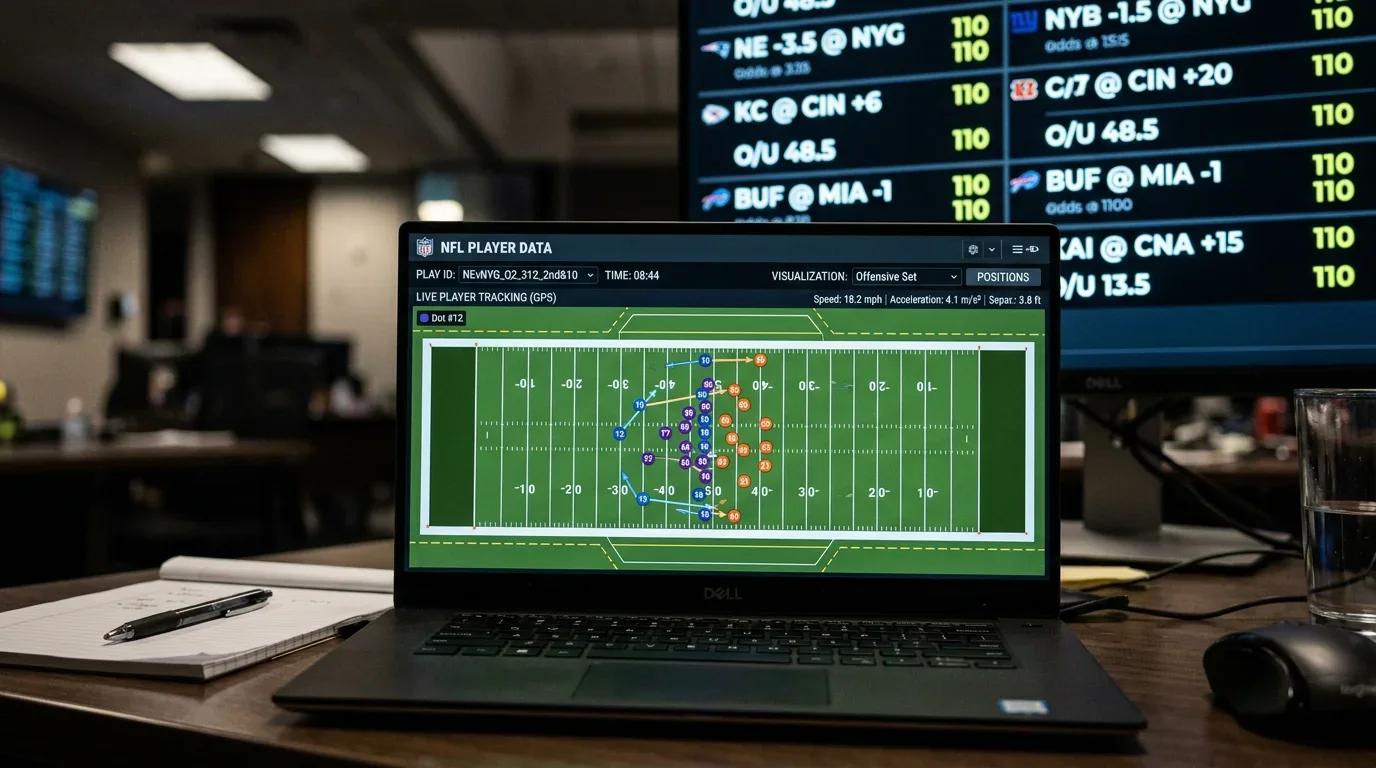
Three years ago I fed five seasons of play-by-play data into a basic machine-learning model and asked it to predict NFL spreads. It performed about as well as flipping a coin — which was humbling, but also instructive. The model failed not because the data was bad or the algorithm was wrong, but because it was competing against bookmakers who already use far more sophisticated versions of the same approach. Understanding what AI does inside the odds-setting machine is the first step toward knowing where human judgment still has an edge.
How AI Shapes NFL Odds Generation
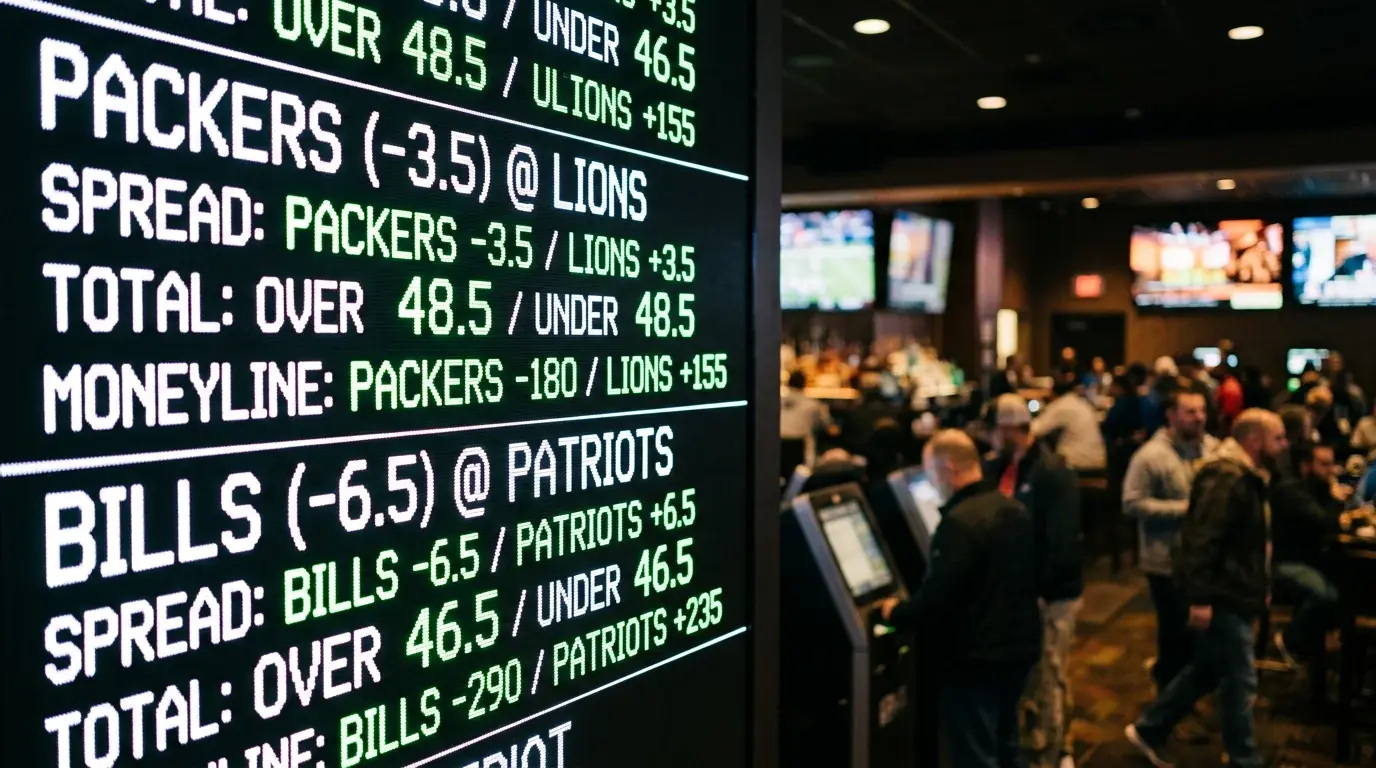
Modern sportsbook lines are not set by a person sitting in a back room watching film. They begin as outputs of algorithmic models that ingest thousands of variables: player-tracking data, historical ATS patterns, weather forecasts, injury probabilities, and real-time betting flows. The integration of live streaming into betting platforms has boosted user engagement metrics by 25%, and AI is the engine behind the real-time odds adjustments that make in-play betting possible.
The process works in layers. The first layer is a power-rating model that assigns each team a strength score based on performance metrics — expected points added, success rate, yards per play. The second layer adjusts for situational factors: home-field advantage, rest days, travel distance, quarterback changes. The third layer incorporates market data — how bettors are actually wagering — and adjusts the line to manage the bookmaker’s risk exposure. Each layer uses machine learning to refine its weights based on historical accuracy, and the models retrain continuously as new data arrives.
The global sports analytics market is projected to exceed $22 billion by 2030, driven largely by AI applications. For bettors, this means the lines you see on your screen are sharper than they have ever been. The easy inefficiencies that existed a decade ago — when lines were set by small teams of human oddsmakers — have been largely eliminated by automation. What remains are the edges that algorithms struggle to capture.
Genius Sports and the NFL Data Pipeline
The NFL granted Genius Sports exclusive rights to its official data and integrity services, a deal that included 18.5 million shares at inception in 2021 and a further 4 million upon extension in 2023. Roger Goodell has described protecting the integrity of the sport as his paramount priority as commissioner, and Genius Sports is the infrastructure that makes that protection operational.
What Genius provides to sportsbooks is not just box-score data — it is granular, play-level information delivered in near-real-time. Player locations, ball trajectories, formation alignments, and pre-snap movements flow from stadium sensors through Genius’s pipeline and into the models that power live odds. This data advantage means that bookmakers who partner with Genius have a richer information set than any individual bettor can assemble independently.
The practical implication is straightforward: if you are trying to beat the line using the same data that the line is built from, you will lose. The bookmaker’s model sees that data first, processes it faster, and adjusts the price before you finish reading the stat sheet. The edges that remain for human bettors exist in categories that data pipelines cannot quantify — coaching tendencies in specific situations, locker-room dynamics, motivation gradients, and the kind of contextual judgment that a nine-year career of watching film develops.
Predictive Models: What They Can and Cannot Do
I run my own predictive model for NFL spreads — a logistic regression that uses about forty variables. It is unsophisticated by industry standards, and that is deliberate. I do not try to out-model the bookmaker. Instead, I use my model as a screening tool: it identifies games where my projected spread diverges from the market line by 2 or more points. Those games go on my shortlist for deeper manual analysis. The model narrows the field; my judgment makes the final call.
What models do well: they process large volumes of historical data without emotional bias, they identify non-obvious correlations (like the relationship between a team’s third-down conversion rate and its ATS performance two weeks later), and they update quickly when new data arrives. What models do poorly: they struggle with small-sample scenarios (a new head coach has no historical data to model), they cannot assess motivation or fatigue beyond crude proxy variables, and they are blind to qualitative information like a player’s body language in pre-game warm-ups or a coach’s tendency to abandon the run in high-pressure moments.
The gap between “can” and “cannot” is precisely where the human bettor adds value. I think of my model as a colleague who does the number-crunching while I provide the context. Neither of us is reliable alone. Together, we produce a better assessment than either would independently.
What AI Means for the UK Punter
Mobile devices handle 80% of sports wagers in the US and a comparable share in the UK. The apps you use to place NFL bets are powered by the same AI infrastructure I have described. Understanding that infrastructure does not give you a direct edge, but it calibrates your expectations. You are not betting against a human oddsmaker who might have a bad day — you are betting against a system that processes millions of data points per game and adjusts in real time.
That sounds intimidating, and it should temper anyone who believes they can beat the market through data alone. But it should not discourage you. The market is not a single entity — it is a combination of sharp models, recreational money, and human-set parameters that create localised inefficiencies. Sharp bettors exploit those inefficiencies not by building a better model than the bookmaker but by identifying the situations where models systematically fall short.
For a deeper look at how those model-driven lines move once real money enters the market, the line movement guide covers the mechanics of sharp and public action on a game-by-game basis. The line is where the AI and the human worlds collide, and that collision is where the opportunities live.
Can individual bettors compete against AI-powered NFL odds models?
Not by building a superior model — the bookmaker’s data infrastructure, processing speed, and modelling depth are beyond what any individual can replicate. The edge for human bettors lies in areas that AI models consistently undervalue: situational context, coaching tendencies in specific game states, motivation dynamics, and qualitative judgment built from years of observation. Using a personal model as a screening tool to identify divergences from the market line, then applying manual judgment to those flagged games, is the most effective approach.
How does Genius Sports’ data partnership with the NFL influence betting lines?
Genius Sports provides sportsbooks with granular, near-real-time play-level data — including player tracking, formation alignments, and ball trajectories — that feeds directly into the algorithms generating NFL odds. This data pipeline gives bookmakers a richer and faster information set than any individual bettor can assemble. The practical impact is that lines are sharper and adjust more quickly to on-field developments, particularly in the live betting market where Genius data drives real-time odds updates.
Written by the editors at nfl Betting Trend.