NFL Weather Impact on Betting: Wind, Cold, Rain and How They Shift Lines
 Available in US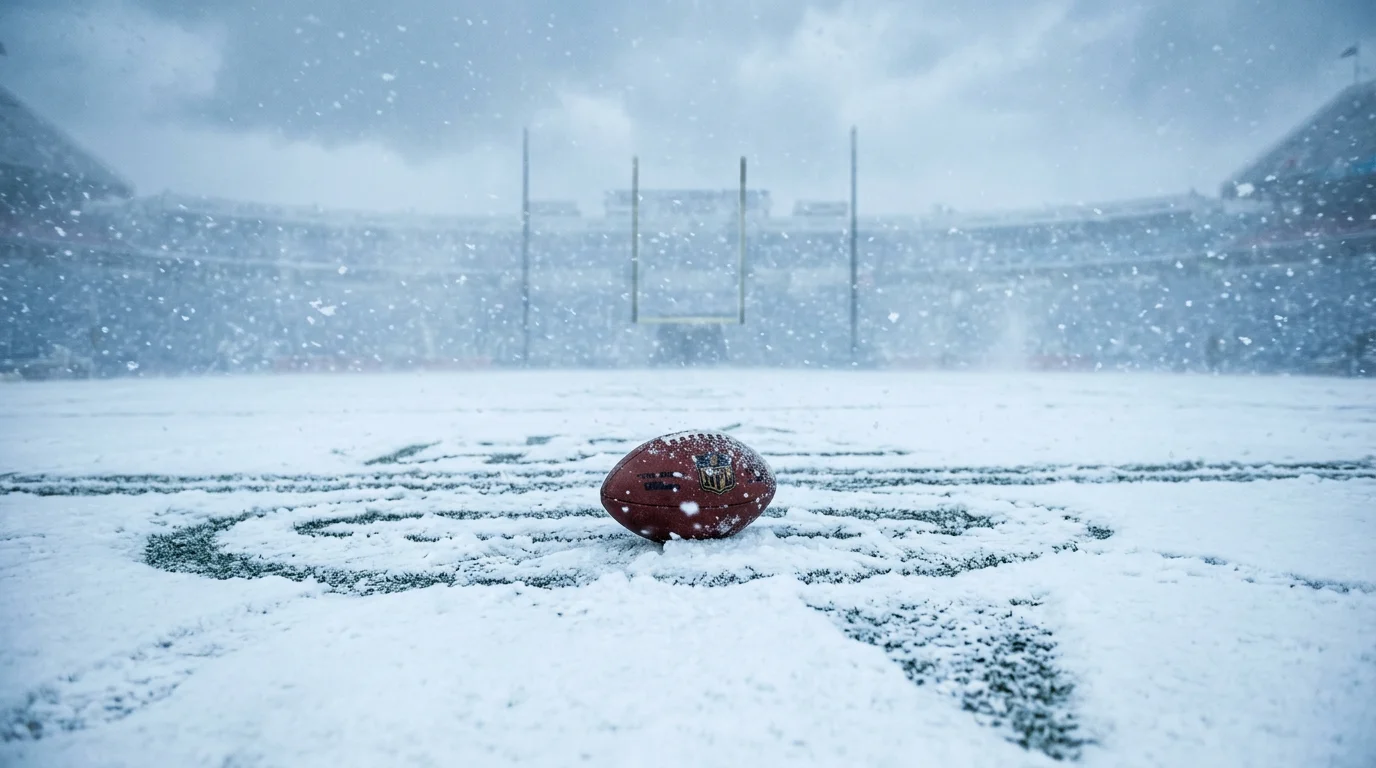
December 2022, Buffalo. Wind gusts hit 40 mph. The total was set at 43.5. The game finished 13-10. I had the under, and I remember thinking it was the easiest money I had made all season — not because I was clever, but because the market had failed to price in a weather event that was visible on every forecast app 48 hours before kickoff. That is the opportunity weather creates: it is public information, freely available, yet consistently underweighted by the market.
Wind and the Passing Game
Wind is the single most impactful weather variable in NFL betting. Above 15 mph sustained, completion percentages drop, deep passing attempts decline, and offences shift to run-heavy schemes that compress scoring. The effect on totals is direct and measurable: games played in winds above 15 mph go under the posted total at a rate north of 58% across the last decade.
What surprises most people is the threshold. Below 15 mph, wind is noise — quarterbacks adjust their release and the impact on passing efficiency is negligible. Above 15 mph, the effect becomes nonlinear: each additional 5 mph of wind produces a disproportionately larger drop in passing yards. By the time you reach 25 mph sustained, the passing game is functionally broken. The global American football betting market grew to $9.5 billion in 2026, and a remarkable amount of that money is wagered on games where bettors never checked the forecast.
I apply a simple rule: if sustained winds are forecast above 15 mph at an outdoor stadium, I subtract 3 to 5 points from the posted total in my personal model. If the adjusted total falls below the market number by 2 or more points, that is an under bet. The wider the gap, the more confident the play.
Cold Weather and Scoring Compression
Temperature alone matters less than wind, but extreme cold — below -5 Celsius — introduces its own effects. Footballs become harder and slicker, affecting grip for both quarterbacks and receivers. Kicking accuracy drops, which reduces field-goal conversion rates and therefore total points. Players tire more quickly in frigid conditions, which slows the pace of play in the fourth quarter.
The global sports betting market is valued at $111.9 billion and projected to reach $226.2 billion by 2034. Within that expanding market, weather-based edges persist because they require manual effort to identify. No algorithm at a bookmaker automatically adjusts the total for a -10C forecast in Green Bay. The adjustment happens reactively, through the flow of money, which means early bettors who check the weather get the best number.
Cold-weather unders are strongest in outdoor NFC North and AFC North stadiums during December and January. I track the forecast for Chicago, Green Bay, Pittsburgh, Cleveland, and Buffalo from Wednesday onward. If the game-time temperature is projected below -5C with any wind component, I treat the under as a high-priority spot. The combination of cold and wind is multiplicative, not additive — each factor amplifies the other.
Rain, Snow and Field Conditions
Rain is a subtler variable. Light rain has minimal impact on modern NFL offences — the balls are treated, the gloves are advanced, and quarterbacks are accustomed to wet conditions. Heavy rain is a different matter. Sustained downpours turn the field into a surface that disrupts footwork, particularly for route-running receivers who rely on sharp cuts. Interceptions increase, fumbles increase, and the game becomes a turnover-driven affair where the spread outcome often hinges on a single play.
Snow is atmospheric but less impactful than you might expect. The footing is actually better on packed snow than on a rain-soaked muddy field, and teams that play outdoors in northern climates are accustomed to it. The exception is heavy, wet snow that accumulates during the game — the kind that obscures yard markers and turns every drive into a grind. Those games are under territory, but they are also rare enough that you should not base a seasonal strategy around them.
One subtlety I have learned to track: field type matters as much as precipitation. Natural grass fields in rain become treacherous far more quickly than artificial surfaces, which drain efficiently and maintain consistent traction. If a heavy-rain game is scheduled at a natural-grass outdoor stadium, the impact on totals and ATS is magnified compared to the same conditions on a synthetic field. It is a small detail, but small details accumulate over a season.
My approach to rain and snow is to check how the home team performs in adverse conditions historically. Some franchises — Green Bay, Buffalo, New England — have decades of institutional knowledge about playing in foul weather. Their players train for it, their coaches scheme around it, and their home-field advantage increases in storms. Backing the home team in a weather-affected game at one of these venues is a situational edge that the spread does not always reflect.
A Practical Forecast Workflow for UK Punters
You are placing bets from across the Atlantic, but checking American weather is no harder than checking the weather in Manchester. Mobile devices handle 80% of all sports wagers globally, and weather apps are on the same phone. Here is the process I follow every week during the season:
Tuesday: note which games are at outdoor stadiums. Eliminate domes from weather consideration entirely. Wednesday: check the extended forecast for each outdoor venue. Flag any game with projected wind above 15 mph, temperature below -5C, or rain probability above 60%. Thursday: cross-reference the flagged games with the posted total. If the total has not moved down despite adverse weather in the forecast, mark it as a potential under. Saturday: check the updated forecast. Weather models sharpen as kickoff approaches, so the Saturday check is the most important. If the adverse conditions are confirmed and the total has still not adjusted, place the under bet.
The entire process adds about fifteen minutes to your weekly routine. It is not glamorous work, but unglamorous edges are the ones that persist because fewer people bother to exploit them.
At what wind speed do NFL totals typically drop significantly?
Sustained winds above 15 mph mark the threshold where passing efficiency declines meaningfully and totals outcomes skew under. Below 15 mph, the impact is negligible. Above 15 mph, each additional 5 mph produces a disproportionately larger effect. Games played in 15-plus mph winds have gone under the posted total at a rate above 58% over the past decade.
How do UK punters check weather conditions at NFL stadiums before placing bets?
Standard weather apps and forecast websites cover every NFL city. The key is to check on Wednesday for an early flag and again on Saturday for a refined forecast as kickoff approaches. Focus on outdoor stadiums only — dome games are unaffected. Look for sustained wind above 15 mph, temperature below -5 Celsius, or heavy rain probability above 60%. If adverse conditions are confirmed and the posted total has not adjusted downward, the under is worth strong consideration.
Written by the editors at nfl Betting Trend.