NFL Betting Trends for the 2026 Season: Early Data, Roster Shifts and Outlook
 Available in US
Every offseason I remind myself that the NFL I analysed last year does not exist anymore. Free agency reshuffles rosters, the draft injects unknowns, and coaching changes rewrite playbooks overnight. The 2026 season is no exception — if anything, the roster upheaval this offseason has been more dramatic than usual, which means the early betting lines are built on assumptions that will be tested harshly in September. Here is what I am watching as the new season takes shape.
Offseason Movers: Where the Market Has Not Caught Up
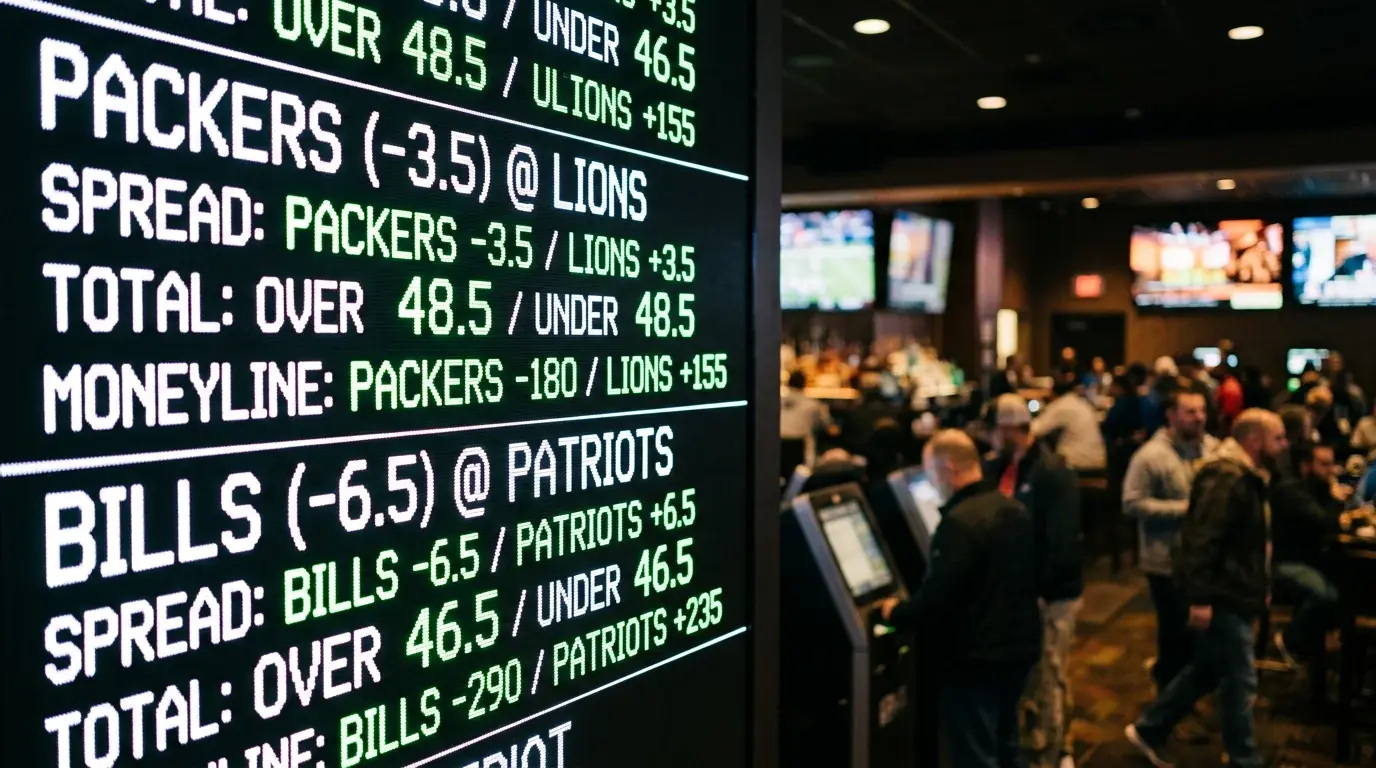
The most profitable window in the NFL calendar is the gap between a major roster move and the market’s full absorption of its impact. Americans wagered $30 billion through legal sportsbooks on the 2025 season, and a significant portion of early-season handle was placed before the true effects of offseason transactions became clear.
I track three categories of offseason movement that create early mispricing. First, quarterback changes — whether through trade, free agency, or draft. A new starting quarterback can shift a team’s win total by two to three games in either direction, and the futures market often undershoots the swing because it anchors to the team’s previous season record rather than the incoming player’s ceiling. Second, defensive coordinator changes. A new scheme takes four to six games to fully install, and teams with defensive overhauls are unreliable ATS bets in Weeks 1-4 but may offer value from Week 5 onward as the system gels. Third, offensive line turnover. This is the most overlooked category. A team that lost two starting offensive linemen will see its rushing efficiency and pass-protection metrics decline measurably, but the spread rarely reflects it because the public focuses on skill-position players.
My offseason routine is to build a spreadsheet of every significant personnel change by team, rank them by likely impact, and flag the teams where the market’s preseason win total or early-season spread feels misaligned with the scale of the change.
Preseason Lines: What They Tell You and What They Do Not
Preseason win totals are released in late spring and represent the bookmaker’s first full projection for each team. Super Bowl LX attracted $1.76 billion in legal wagers, and the futures market around the 2026 season will be similarly active as early bettors rush to stake positions. The question is whether those early prices are accurate.
In my experience, preseason win totals tend to compress toward the mean. Bookmakers set them conservatively — teams expected to be good are priced slightly lower than they should be, and teams expected to be bad are priced slightly higher. The result is that the extremes offer the most value. A team projected at 4.5 wins that you believe will win 3 or fewer is a strong under. A team at 11.5 that you think will reach 13 is a strong over. The middle of the distribution — teams at 7.5 to 9.5 — is priced more efficiently and offers less edge.
I place most of my futures bets in June, after the draft but before training camp. The market is thinnest at this point, and the lines have not yet absorbed the sharp money that arrives in July and August. By the time preseason games begin, the numbers have tightened and the early value has evaporated.
Early ATS Angles to Watch in 2026
Every season I enter with a shortlist of structural angles that I expect to produce value in the opening weeks. The global American football betting market hit $9.5 billion in 2026, and the early weeks are when the widest mispricings occur because the market is reacting to narratives rather than data.
This year I am watching three angles in particular. First, teams with new head coaches as home underdogs in Weeks 1-3. New coaches bring an energy boost that is difficult to sustain but genuine in the early weeks — players are motivated, schemes are unfamiliar to opponents, and the home crowd amplifies the fresh-start narrative. Second, teams coming off seasons where they significantly overperformed their point differential. These teams are likely to regress, but the public still prices them based on their win total, creating overvalued favourites. Third, teams with major defensive personnel additions (a free-agent pass rusher, a traded shutdown corner) playing against offences that had strong pass-protection metrics last year. The new defensive talent may not immediately gel with the scheme, and the offence’s strength may be intact — meaning the line undervalues the offence in the early going.
UK Viewer Schedule: When to Watch, When to Bet
The NFL has more than 14.3 million fans in the UK, and the 2026 broadcast schedule will give UK viewers more access than ever. International games on NFL Network averaged 6.2 million viewers in 2025, a 32% rise, and the UK remains the league’s largest international market by a wide margin.
For betting purposes, the key time slots are Sunday afternoon (6pm and 9:25pm UK time for the early and late windows), Sunday Night Football (1:20am Monday morning), Thursday Night Football (1:20am Friday morning), and Monday Night Football (12:15am or 1:15am Tuesday morning). The season-phase breakdown explains why your approach should shift across these time slots as the year progresses — but the universal principle is to have your analysis complete before the first game of each slate. If you are scrambling to evaluate a Sunday game at 5:55pm, you are not analysing — you are guessing.
I build my weekly card on Tuesday evening UK time, when the opening lines are published. By Thursday I have a shortlist of two to four games with clear edges. Friday and Saturday are for monitoring line movement and injury news. Sunday morning is a final check before the first kickoff. This rhythm keeps me ahead of the market without consuming my entire week — which, after nine years, is as much a part of bankroll management as any staking plan.
When is the best time to place futures bets for the 2026 NFL season?
The optimal window is typically June — after the draft but before training camp. The market is thinnest at this point, sharp money has not yet arrived in volume, and the lines reflect preseason projections rather than on-field data. By the time preseason games begin in August, the numbers tighten as more money and information enter the market. Early positions capture the widest pricing gaps.
How do major offseason trades affect early NFL betting lines?
Major roster moves — particularly quarterback changes, defensive coordinator hires, and offensive line turnover — can shift a team’s true win expectation by two to three games. The betting market often adjusts slowly because it anchors to the previous season’s record rather than projecting the full impact of the change. Teams with significant upgrades may be undervalued in early-season spreads, while teams that lost key players may be overvalued until the on-field results force a correction.
Created by the ”nfl Betting Trend” editorial team.