NFL Teaser Betting Trends: 6-Point Strategy Through Key Numbers and Historical Win Rates
 Available in US
The first teaser I ever placed was a 10-point, three-leg monstrosity that felt impossible to lose. It lost. The maths behind that loss are what eventually made me a better bettor, because teasers are one of the few bet types where strategy is not optional — it is the entire point. Done correctly, a 6-point NFL teaser through key numbers is one of the most consistently profitable structures in sports betting. Done carelessly, it is a tax on optimism.
How Teasers Work: Mechanics for UK Punters
A teaser is a multi-leg bet where you adjust the point spread in your favour by a set number of points — usually 6, 6.5, or 7 — but in exchange you combine two or more selections into a single wager where every leg must win for the bet to pay out. The price you accept is lower than a standard parlay because you are getting extra points on each selection.
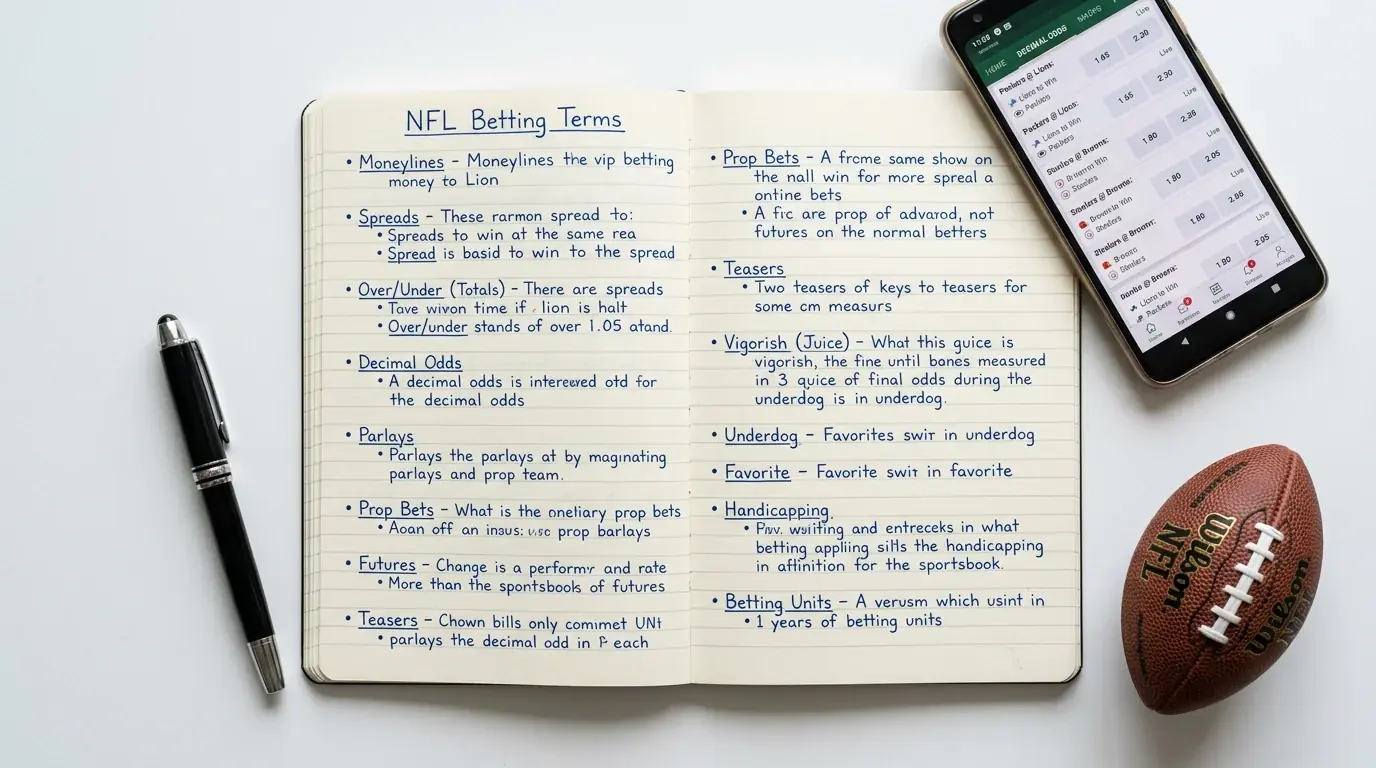
In the UK, teasers are not always prominently displayed on bookmaker apps, but the larger operators offer them under “NFL specials” or “alternative lines” sections. The standard 6-point, two-team teaser at -110 (1.91 decimal) is the bread-and-butter structure. You are essentially paying even-money odds for two adjusted spreads. Americans wagered $30 billion on the 2025 NFL season, and teasers accounted for a growing portion of that handle as more bettors discovered the mathematical logic behind them.
The critical concept is that not all 6 points are created equal. Moving a spread from -8 to -2 crosses the key numbers 7 and 3, which are the two most common margins of victory in NFL games. Moving a spread from -5 to +1 crosses 3 and lands you on the right side of a one-point game. Both of those teasers are strategically sound. Moving a spread from -12 to -6 crosses no key numbers at all — you are getting 6 points of air.
Key Number Teasers: Crossing 3 and 7
In NFL scoring, 3 (field goal) and 7 (touchdown) are the margins that occur most frequently. Approximately 15% of games are decided by exactly 3 points and another 9% by exactly 7. These two numbers alone account for nearly a quarter of all final margins. When a teaser crosses both of them, you are adding 6 points that capture the two densest outcome zones on the margin-of-victory distribution.
The classic teaser structure involves taking a favourite of -7.5 to -8.5 and teasing it down to -1.5 to -2.5, plus a second favourite or underdog whose teased number also crosses through 3. The historical win rate for two-team, 6-point teasers where both legs cross through 3 and 7 exceeds 72% — well above the 72.4% breakeven threshold for -110 pricing. Super Bowl LX alone attracted $1.76 billion in legal wagers, and the prop and teaser markets around that game were some of the most aggressively bet of the season.
I keep a reference table of key numbers and their frequencies open on my laptop every Tuesday when I assess the week’s card. If a game’s spread sits at -7.5, -8, -2.5, or -1.5, I immediately evaluate it as a teaser leg. Any spread between -1 and -3 on the favourite side is less interesting because teasing it to the underdog side crosses 0 (a push on pick’em games) but may not cross 3 — the number that matters most.
Two-Team vs Three-Team Teasers
The maths strongly favour two-team teasers over three-team (or higher) variants. Each additional leg multiplies the probability of failure. A two-team teaser at the 72%+ win rate described above clears the breakeven hurdle. A three-team teaser requires approximately 86% per-leg win probability to break even at standard pricing, which means each leg must be a near-lock. That bar is extremely difficult to clear consistently.
I place three-team teasers perhaps twice a season — only when three games on the same week all feature spreads that cross both 3 and 7, and all three games have strong situational backing (favourable rest, home-field advantage, historical ATS strength in the relevant context). If even one leg feels like a marginal inclusion, I drop it to two legs. The profit in teasers comes from discipline, not volume.
Teaser Pitfalls: Where the Strategy Breaks Down
The most common mistake I see is teasing totals. A 6-point adjustment on a total sounds appealing — teasing a total of 47.5 down to 41.5 under, for example — but the distribution of combined scores in NFL games does not cluster around key numbers the way final margins do. You are getting 6 points across a wider, flatter probability curve, which means each point of adjustment captures less incremental value. I avoid totals teasers entirely and restrict my teaser activity to spreads.
The second pitfall is teasing through only one key number. A -4 to +2 teaser crosses 3 but not 7. A -10 to -4 teaser crosses 7 but not 3. Both are weaker than the dual-key-number variant because they miss one of the two clustering zones. The global sports betting market exceeded $111.9 billion in 2025, and within that ocean of money the punters who consistently profit on teasers are the ones who insist on both key numbers or walk away.
The third pitfall is emotional attachment. A teaser where one leg is the team you support and the other is selected purely to complete the bet is not a strategy — it is a rationalisation. Every teaser leg should stand on its own analytical merits. If you would not consider betting that leg as a straight spread wager, it has no business inside your teaser.
Why are 6-point teasers considered the most effective in NFL betting?
Six points is the minimum adjustment that allows you to cross both 3 and 7 — the two most common margins of victory in NFL games. Together, these numbers account for nearly a quarter of all final margins. Teasing through both captures the densest outcome zones on the margin-of-victory distribution, producing win rates above the breakeven threshold at standard -110 pricing. Larger teasers (7 or 10 points) cost more in odds and often do not improve the per-leg win probability enough to compensate.
Which key numbers should a teaser cross to maximise win probability?
The two essential key numbers are 3 (field goal margin) and 7 (touchdown margin). A teaser leg that crosses both — for example, moving a -7.5 spread to -1.5 — captures the two most frequently occurring final margins in the NFL. Legs that cross only one key number or neither are statistically weaker and should generally be avoided. The ideal teaser combines two legs that each cross through both 3 and 7.
Prepared by the nfl Betting Trend editorial staff.