NFL Betting Line Movement: What Drives Odds Shifts and When to Act
 Available in US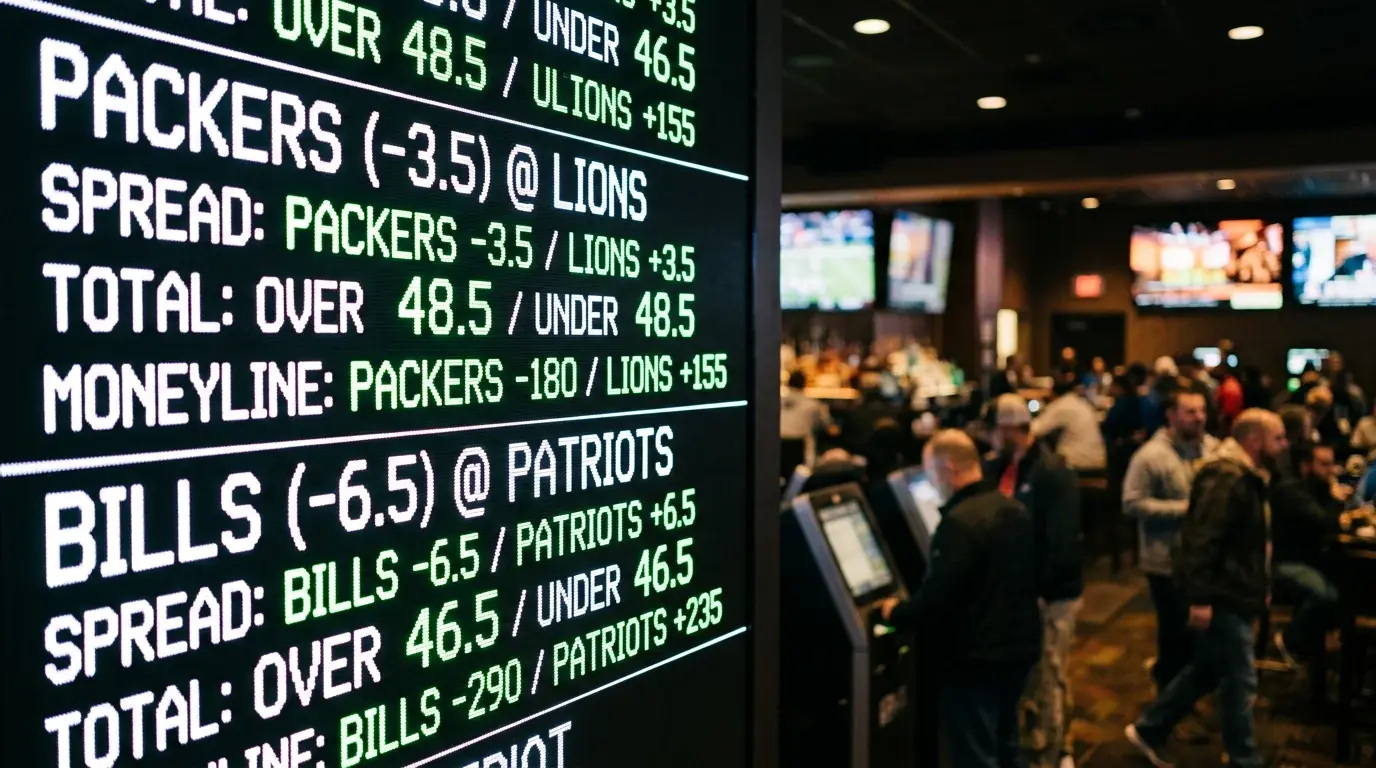
I used to treat the opening line as gospel. If the bookmaker set Kansas City at -3, I assumed that number was the product of sophisticated modelling and left it at that. Then I watched that -3 move to -1.5 by kickoff despite 70% of public tickets landing on the Chiefs. That was the moment I realised the opening line is a draft, not a final answer — and the movement between open and close tells a story more valuable than the number itself.
Why NFL Lines Move
Lines move for one reason: money. When a bookmaker receives disproportionate action on one side, it adjusts the number to attract bets on the other side and balance its exposure. But not all money is created equal. A thousand casual ten-pound bets on the favourite will shift a line far less than a single five-figure wager from a respected account. Genius Sports, the NFL’s exclusive data partner since 2021 — a deal that included 18.5 million shares plus a further 4 million upon extension — feeds integrity data and real-time statistics to sportsbooks, but the line itself is ultimately shaped by the flow of money through the market.
Three forces drive that flow. First, public sentiment: casual bettors tend to back favourites, overs, and teams with recent wins. This creates predictable one-directional pressure early in the week. Second, sharp action: professional bettors and syndicates place large, informed wagers that bookmakers respect and react to quickly. Third, news: injury reports, weather changes, and roster announcements can shift a line by multiple points in minutes. For UK punters, the timing of NFL injury reports — released on Wednesday, Thursday, and Friday during the US afternoon, which is evening in the UK — means you need to be watching lines after 5pm GMT if you want to catch the move before it settles.
Opening Line vs Closing Line: Where the Value Sits
The closing line is the sharpest number the market produces. It absorbs every piece of available information — public money, sharp money, injury news, weather forecasts — and reflects the collective judgement of millions of pounds in action. Beating the closing line consistently is the single best indicator of long-term betting skill, which is why professional bettors obsess over it.
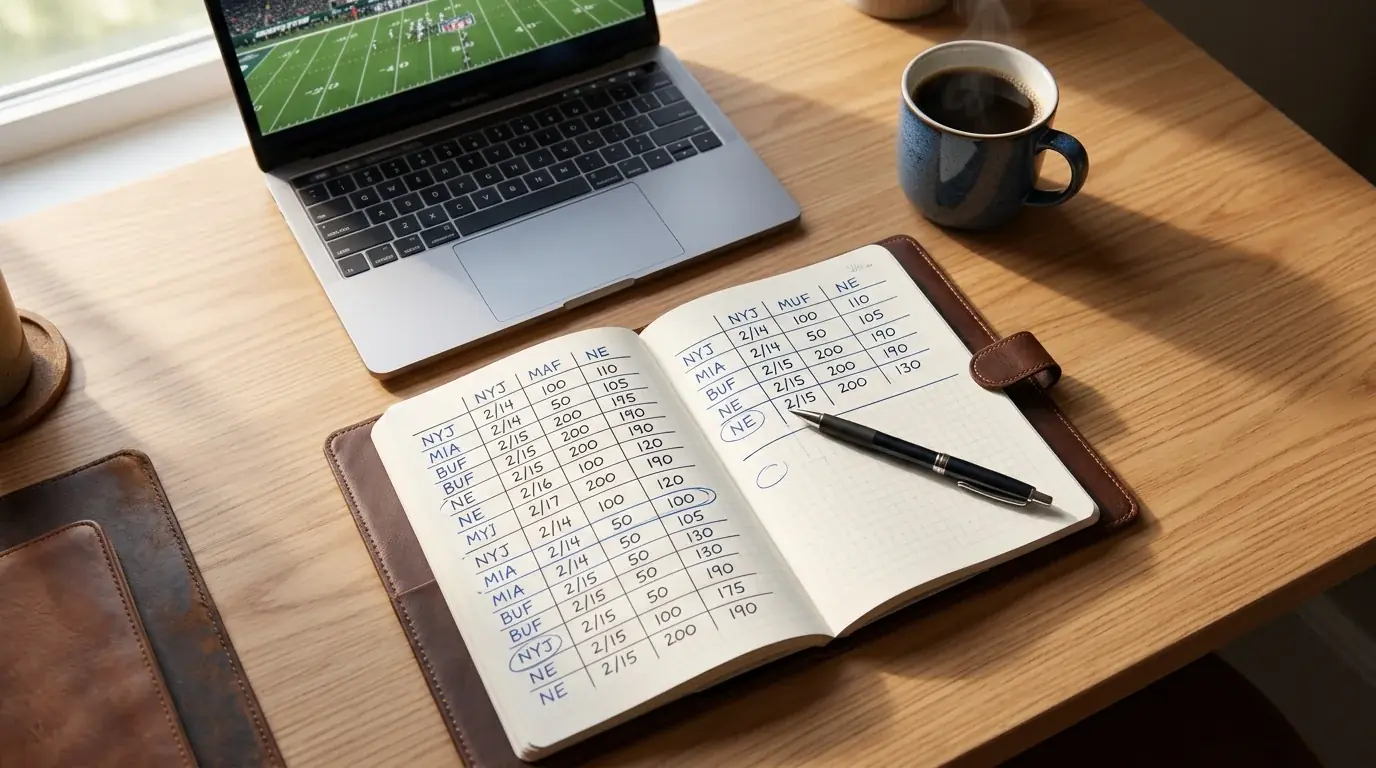
I track opening-to-closing movement for every game I consider betting. If I grab a team at -3 on Tuesday and the line closes at -4.5, I got a full 1.5 points of value — my bet is stronger than the market’s final assessment. Over a season, those half-points and full points compound. Live and in-play betting now accounts for 53.4% of all wagers globally, surpassing pre-match for the first time in 2026, but the pre-match closing line remains the benchmark because it reflects the deepest, most liquid market.
For UK punters, the practical lesson is straightforward: bet early in the week if you believe you have identified value that the market has not yet priced in. Wait until closer to kickoff only if you are reacting to specific information — a confirmed injury, a weather change — that will move the line in your favour. Sitting on a position while the line drifts against you is a slow leak.
Reverse Line Movement: The Sharp Signal
This is the concept that changed my approach to NFL betting more than any other. Reverse line movement occurs when the line moves in the opposite direction to the majority of public tickets. If 75% of bets are on Team A, you would expect the line to shift in Team A’s favour. If instead it shifts toward Team B, that tells you the minority of bets — the sharp money — carries more weight than the majority.
I treat reverse line movement as a flag, not a trigger. It tells me something interesting is happening, but I still need to understand why before I act. Sometimes the sharp money is reacting to information I do not have — a practice injury that has not hit the official report, a scheme change visible only on film. Other times the sharp side is simply fading an overreaction to a recent result. Either way, the movement itself is the most transparent signal available to someone who is not inside the trading room, and I check it for every game I am considering.
One refinement I have added over the years: I weigh reverse line movement more heavily when it occurs early in the week — Tuesday or Wednesday — than when it happens on Saturday. Early-week RLM typically represents sharp accounts taking calculated positions. Late-week RLM can be muddied by injury news, weather changes, or a single large recreational wager that happens to land on the unpopular side. Context shapes interpretation.
If you want to understand how sharp action manifests in the broader market, the sharp vs public betting breakdown covers the methodology in detail — including the 20% divergence threshold that separates noise from signal.
Tools for Tracking Line Movement From the UK
You do not need a Bloomberg terminal to track NFL lines. Several free platforms display opening and current lines, movement history, and public betting percentages. The challenge for UK punters is that most of these tools display American odds by default. Switch your settings to decimal or fractional before you start comparing — otherwise you will spend more time converting numbers than analysing them.
I use a three-step routine every Tuesday during the season. First, I note the opening lines for every game. Second, on Thursday evening I check which lines have moved and cross-reference with public ticket percentages to identify any reverse movement. Third, on Saturday morning I review injury reports and weather forecasts for any late-breaking news that might push the line further. That three-touch process takes about forty minutes total across the week and catches the vast majority of significant movements. Mobile devices now handle 80% of sports wagers in the US and a similar share in the UK, so all of this can be done from your phone during a lunch break or commute.
The temptation for beginners is to install five different apps and compare every line obsessively. Resist it. Track one reliable source consistently rather than skipping between platforms. Consistency in your data source matters more than coverage breadth, because what you are looking for is movement over time, and mixing sources introduces noise.
What is reverse line movement in NFL betting?
Reverse line movement occurs when the betting line moves in the opposite direction to where the majority of public tickets are landing. For example, if 70% of bets are on Team A but the line shifts in Team B’s favour, it indicates that the smaller number of sharp or high-value wagers on Team B outweigh the volume of public bets. It is one of the most reliable signals that informed money disagrees with public sentiment.
How far in advance of kickoff do NFL lines typically stabilise?
NFL lines are most volatile from Tuesday to Thursday as sharp bettors take early positions and injury reports begin to surface. By Friday evening the line has usually absorbed the majority of sharp action and injury news. Final adjustments happen on Sunday morning, particularly for 1pm Eastern kickoffs when late inactive lists are confirmed. For UK punters, this means Saturday morning is often the last window to capture meaningful value before the line settles.
Written by the editors at nfl Betting Trend.